











Installation Guides
Step-by-step guides for installing CB radios, antennas, and accessories
Guides
How to install a CB radio in a tractor?
Getting a CB radio set up in a modern tractor can take some work - let us help walk you through the steps.
How to install a CB Radio
Whether it's parts or assistance, we've got you covered. Installation tips, advice for your CB system.
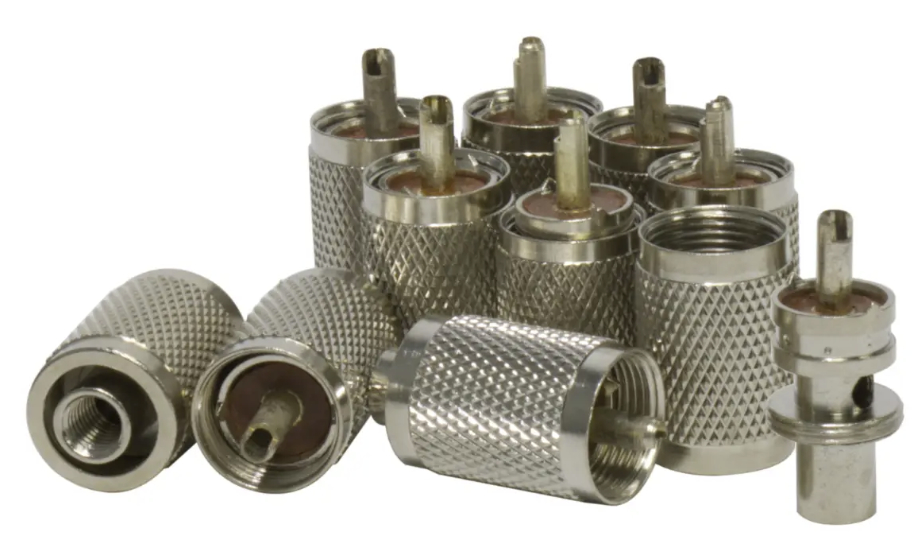
How do I repair a CB coax cable?
Quick and easy guide to installing a PL-259 CB radio coax connector
Quick answers on installation guides
All answers →What is a ground plane for a CB antenna?
A ground plane is the metal surface under a CB antenna that helps it transmit efficiently. On vehicles, the metal body acts as the ground plane. Poor grounding can cause high SWR and weak performance. Some antennas are designed as 'no ground plane' (NGP) for fiberglass or non-metal vehicles.
Where can I mount a CB antenna on a Peterbilt 579?
The Peterbilt 579 can be equipped with several antenna mounting locations depending on configuration. Common locations include a hood-mounted bracket on the driver’s side, mounts above the door, and mounts behind the cab. The best peforming location is the hood mount which provides a sufficient ground plane. If mounted on the cab above the door, or behind the cab, you should expect poor CB performance.
How close can CB antennas be to each other in a co-phase system?
In a co-phase (dual antenna) system, antennas are typically spaced 8 to 9 feet apart to properly shape the radiation pattern. Spacing them too close causes the antennas to interact negatively, increasing SWR and reducing performance. Proper spacing is critical for co-phase systems to work as intended.
Why do some CB and 10 meter radios need large power wires?
Power wire size is determined by how much current the radio draws and how far the wire runs to the battery. Radios over 300 watts typically require #4 AWG wire at 20 feet or less. Radios over 200 watts usually require at least #8 AWG. Radios in the 50–100 watt range are best served with #10 AWG or thicker. Lower-power radios generally work well with #10–12 AWG wire.
Other topics
Still stuck? Our techs answer the phone.
We run these radios ourselves. Call 1-844-925-2688 (M–F 10–5 CST), or send a question and we will write back.