













Antenna Length Calculator — Walcott Radio
ANTENNA LENGTH
CALCULATOR
Calculate the physical length of a resonant antenna for any frequency or band — quarter wave, half wave, 5/8 wave, or full wave. Sized for typical metal whip antennas.
| Type | Length | Inches | Meters |
|---|
What resonance means
A resonant antenna is one cut to a specific physical length so that the radio wave it transmits or receives forms a complete standing wave on the conductor. When the length matches the frequency, the antenna presents a clean impedance at its feedpoint — ideally close to 50 ohms for radio gear — and SWR drops near 1.0.
The base formula in free space is λ = 300 / freq(MHz), which gives the wavelength in meters. From there, antenna types take a fraction of that wavelength: 1/4 wave, 1/2 wave, 5/8 wave, etc. A full wavelength antenna is rare for vertical use because of its physical size at low frequencies (over 36 ft at 27 MHz).
Where the number 234 comes from
The classic operator's shortcut L(feet) = 234 / f(MHz) for a quarter-wave whip already bakes in a velocity factor of about 0.95. That accounts for the fact that radio waves travel slightly slower along a real metal conductor than they do through empty space. This calculator uses the same assumption — it's correct for stainless steel whips, copper, brass, and basically any plain metal antenna element.
For most cut-to-tune VHF/UHF whips and your standard 102″ CB stainless steel whip, the math here matches reality within a few percent. Always cut a little long, measure SWR, and trim down.
What about fiberglass antennas?
Fiberglass CB antennas like Firestik, Francis, Skipshooter, and others aren't straight metal whips — they're a copper wire helically wound around a fiberglass rod. The wire path inside is much longer than the antenna's physical length, which is how a 4-foot fiberglass antenna can resonate at the same frequency as an 8.5-foot stainless steel whip. The math behind these is loading-coil engineering, not simple wavelength division.
This calculator tells you the physical electrical length of a resonant whip. If you're shopping for a fiberglass antenna, just go by the manufacturer's frequency rating — they've done the engineering. If you're building or trimming a metal whip, the numbers above are exactly what you need.
Why we publish length tables
Antenna formulas are starting points, not final cuts. Real antennas are affected by the mounting environment — nearby metal, ground plane size, vehicle body capacitance, even the dielectric of nearby paint. Always cut a little long, measure SWR, and trim down. You can shorten an antenna; you can't put length back.
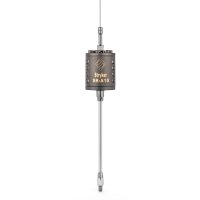
For rigid metal whips like the classic 102″ CB stainless steel, the length is fixed at the factory. Tunable antennas (Stryker SR-A10, Predator 10K, Firestik FS4B with adjustable tip) let you dial in by raising or lowering the radiating element until SWR is centered on your channel of interest. See our SWR Antenna Tuning Calculator for that workflow.
Guides that go with this tool
The theory behind the numbers.
Business Band Frequencies
Discover the secret to seamless communication in your business with our guide on business band frequencies. Boost productivity and stay connected. Click now!.
CB Radio Frequencies
View all of the CB frequencies used in the USA
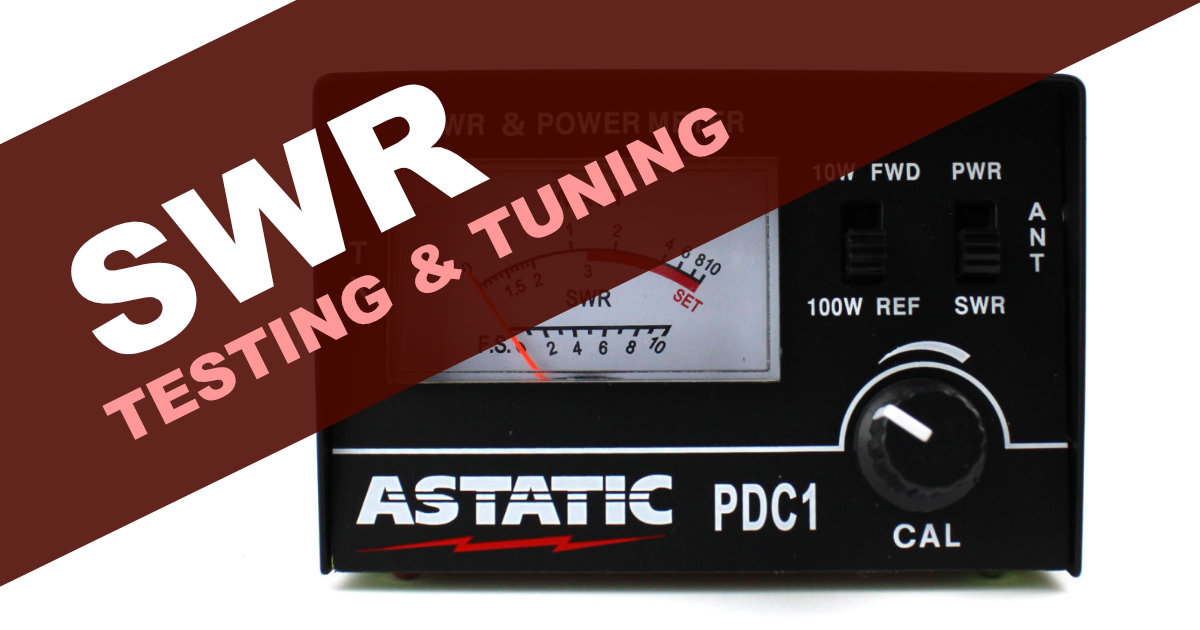
Checking and Setting SWR on a CB Radio
Learn what SWR means, why it matters, and how to correctly check and adjust SWR on your CB radio using built-in meters or external SWR meters. Simple explanations, step-by-step instructions, and antenna tuning tips.
Want to go deeper?
23 guides on CB radios, antennas, installation and troubleshooting — written by our technicians. Find the why behind what this calculator tells you.
Still stuck? Our techs answer the phone.
We run these radios ourselves. Call 1-844-925-2688 (M–F 10–5 CST), or send a question and we will write back.